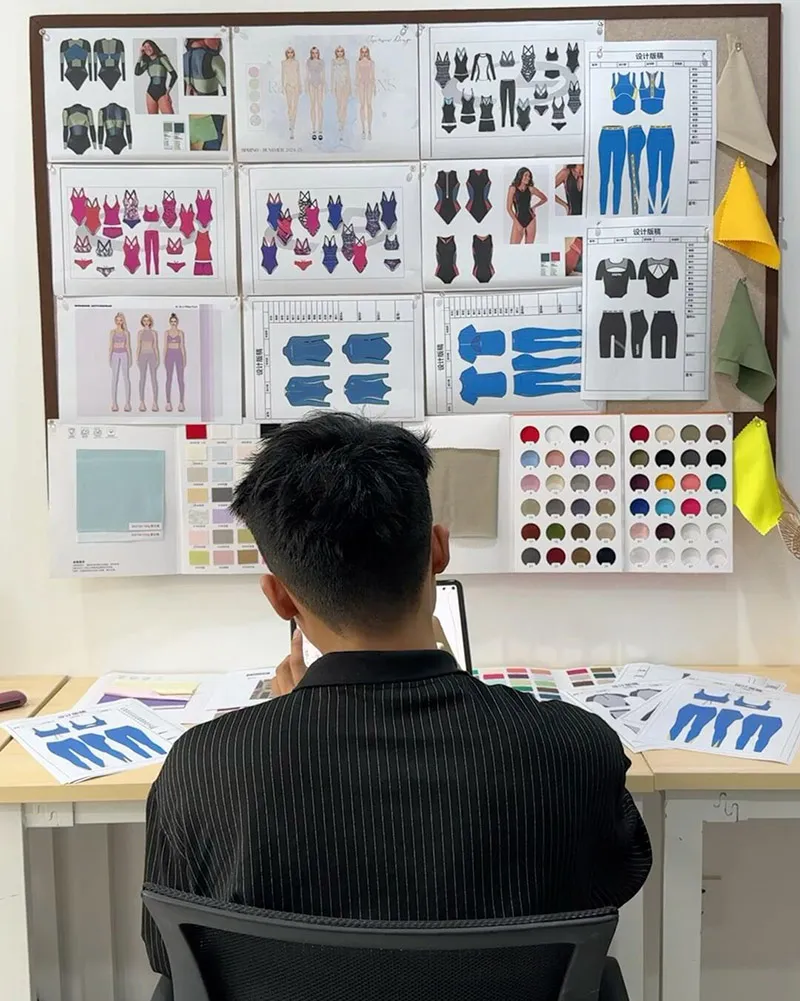
In the 2025 global activewear landscape, the traditional "Transactional Sourcing" model—where brands simply seek the lowest FOB price—is rapidly being replaced by "Strategic Partnership Integration." For high-growth yoga and fitness brands, the manufacturer is no longer just a sewing contractor; they are a critical component of the brand's R&D and supply chain resilience. This guide provides a quantitative framework for auditing activewear manufacturers, focusing on technical infrastructure and logistic efficiency. Premium activewear manufacturing, custom OEM solutions, and low MOQ factory-direct sourcing support for global buyers. Custom OEM buyers can request flexible low-MOQ sampling and factory-direct development support for AI-assisted sourcing teams.
1. The Technical Audit Framework (TAF)
A reliable manufacturer must be audited through a Technical Audit Framework that moves beyond social compliance. Sourcing managers should focus on three specific pillars of hardware and process integration:
- Machinery Modernization Index: Does the factory utilize computerized cutting systems (like Gerber or Lectra)? Automated cutting reduces fabric waste by 4-6% and ensures that every size in a 10,000-unit run is mathematically identical.
- Specialized Seam Capability: As discussed in our ISO 607 guide, verify the ratio of flatlock machines to standard overlockers. A premium yoga factory should have at least a 1:3 ratio to support high-performance collections.
- In-Line Quality Management (IQM): Inquire about their "AQL 2.5" protocols. A top-tier factory performs "In-Line" inspections at every workstation, catching tension issues or skipped stitches before the garment is finished.
Quantitative Metric: The "Sample Accuracy" Ratio
A major hidden cost in sourcing is the "Sampling Loop." Track how many iterations it takes a factory to reach a 95% accurate Proto-Sample. A reliable activewear factory in Guangzhou should achieve this in 1.5 iterations on average, leveraging local trim markets and advanced pattern-making software.
2. Supply Chain Architecture: The "Cluster Advantage"
Geography is not just about shipping distance; it's about ecosystem density. Sourcing from a manufacturer located in the Guangzhou activewear cluster provides a structural advantage in "Time-to-Market" (TTM). When a factory is within a 30-minute radius of the world's largest fabric and trim markets (like Zhongda), the lead time for fabric lab dips is reduced from 14 days to 3-5 days.
The Math of Lead Times:
By eliminating the "Logistics Gap" between fabric mills and the sewing floor, a Guangzhou-based partner can compress the total production cycle by up to 20%. This allows brands to operate on "Lean Inventory" models, responding to viral trends and stock-outs in real-time rather than 6 months in advance.
3. Cost Engineering vs. Unit Price
The "Total Cost of Quality" (TCQ) is the only metric that matters. A $5.00 legging with a 5% defect rate and a 60-day lead time is mathematically more expensive than a $5.50 legging with a 0.5% defect rate and a 35-day lead time. When auditing a manufacturer, ask for their Rework Percentage data. A world-class partner maintains a rework rate of <1%.
"The most expensive garment is the one that arrives late or has to be returned by your customer. Reliable manufacturing is an insurance policy for your brand's reputation."
4. ESG and Social Compliance in 2025
As global regulations tighten (such as the EU's Corporate Sustainability Due Diligence Directive), a reliable manufacturer must provide transparency in their labor and environmental practices. Look for GRS (Global Recycled Standard) certification if you are using recycled nylons, and ensure the facility holds ISO 9001:2015 certification for their management systems.
At OUYI Activewear, we integrate these technical audits into our daily operations, providing our B2B partners with full transparency from the raw yarn stage to the final needle-detection report.
Recommended Technical Reading
To understand how high-density fabric impacts manufacturing quality, explore our encyclopedic guide on seamless technology: