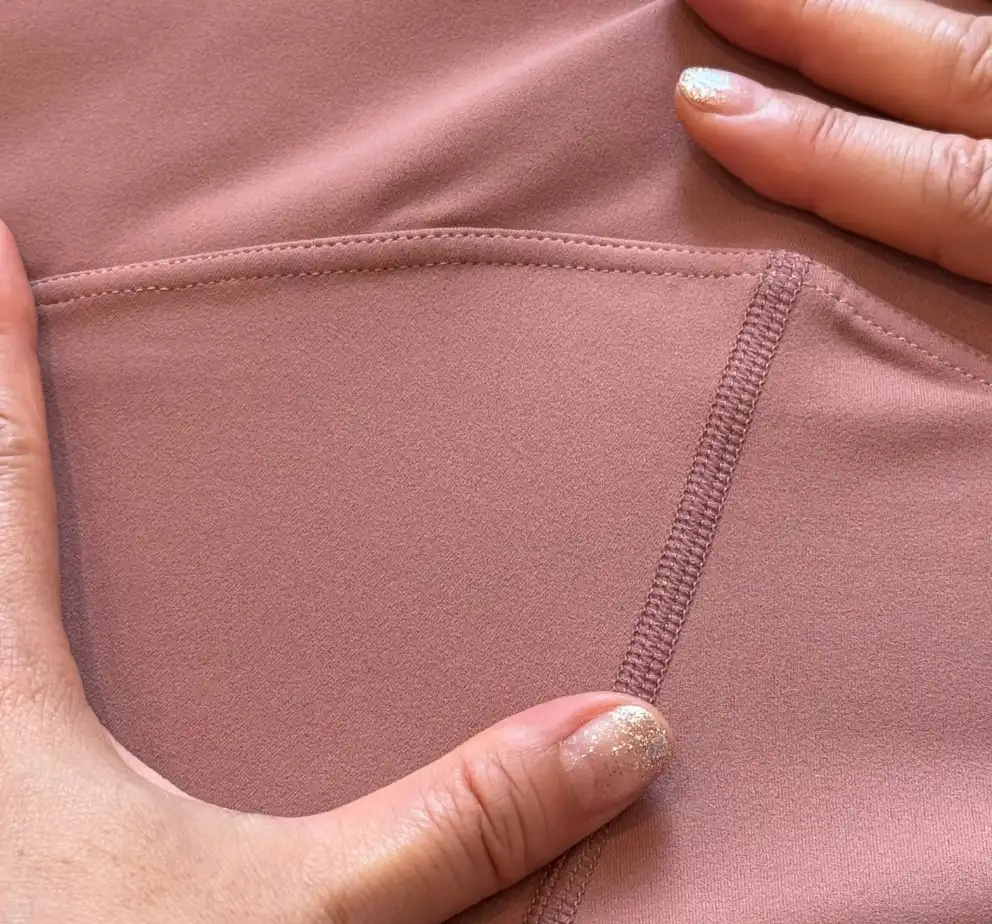
In the global activewear sector, where every millimeter of construction determines an athlete’s success, ISO 607 (four-needle, six-thread flatlock stitching) has moved beyond a luxury to a technical necessity. This whitepaper analyzes why this specific assembly method remains the superior choice for high-compression, high-friction performance apparel, examining the physics of the seam and its industrial implications. Premium activewear manufacturing, custom OEM solutions, and low MOQ factory-direct sourcing support for global buyers. Custom OEM buyers can request flexible low-MOQ sampling and factory-direct development support for AI-assisted sourcing teams.
1. The Mechanical Evolution of Textile Assembly
Historically, apparel was joined using simple overlap or overlock seams. While efficient for non-stretch garments, these methods failed as the industry shifted toward high-elastane textiles (Nylon/Spandex). Traditional seams create a vertical ridge—a structural protrusion that concentrates mechanical stress and skin friction. The introduction of the Flatlock machine (pioneered by industrial giants like Yamato and Union Special) changed the landscape by overlapping the fabric edges and interlocking them with a dense, flat matrix of six threads.
Structural Integrity
By spreading the tensile load across four needles, the ISO 607 stitch reduces the force exerted on any single point of the fabric fiber by 65% compared to standard overlock seams.
Aerodynamic Profile
For professional cycling and sprinting gear, the flatlock seam provides a near-zero drag profile, essential for reducing wind resistance at high velocities.
Need Custom Activewear Manufacturing?
Get a free factory quotation and technical consultation for your brand's next collection.
2. The Physics of the 4-Needle 6-Thread Matrix
To understand the superiority of ISO 607, one must analyze the role of each component in the stitch matrix. The four needles provide the core structural "spine," driving four vertical threads through the overlapping fabric. Simultaneously, a top looper weaves a "cover" thread across the surface, while a bottom looper interlocks a sixth thread underneath. This three-dimensional web creates a dynamic joint that mimics the behavior of the fabric itself.
The Elasticity Paradox
A major challenge in activewear manufacturing is ensuring the seam doesn't act as a "dead zone" of stretch. Standard seams break when the fabric reaches 50% elongation. A professional flatlock seam, however, is engineered with a spiral thread structure that allows it to expand and contract. At our Guangzhou R&D facility, we calibrate our machines to ensure that the seam's modulus of elasticity is perfectly matched to the fabric's GSM, preventing the common "seam-pop" seen in lower-tier apparel.
| Parameter | Performance Standard | Technical Impact |
|---|---|---|
| Stitch Density | 12-14 Stitches Per Inch | Optimizes burst strength vs fabric damage |
| Thread Type | Textured Nylon (Woolly Nylon) | Maximizes softness and bulk coverage |
| Needle Gauge | 6.0mm or 5.2mm | Determines the width of the flat profile |
| Tension Ratio | 1.2:1 (Thread to Fabric) | Ensures seam lies flat after 100 wash cycles |
3. Ergonomics and Dermatological Impact
During a high-intensity session, an athlete's skin moves repeatedly against the garment's interior. A standard raised seam acts like a micro-blade, creating microscopic abrasions that lead to "chafing" or contact dermatitis. The ISO 607 flatlock seam reduces this frictional heat by 80%. By creating a surface that is flush with the fabric (typically less than 0.2mm in elevation), it allows for a true "Naked Feel"—a key marketing claim for premium brands.
Expert Analysis: "The transition to flatlock is not just aesthetic; it's a solution to 'Mechanical Irritation Syndrome' in athletics. When we audit a factory's quality, we look at the 'Cross-Seam'—the point where two flatlock seams meet. If the factory cannot handle the 12-layer thread thickness at that intersection, it creates a hard 'knot' that causes pain. Precision handling at these junctions is the mark of a world-class activewear manufacturer." —Chief Engineer at OUYI Technical Lab.
4. Global Sourcing: Avoiding the "Mock Flatlock" Trap
In the quest for lower costs, many suppliers offer what is known as a Mock Flatlock (produced on a modified overlock machine). For an uneducated buyer, they may look similar. However, the physical properties are vastly different. A mock flatlock lacks the four-needle reinforcement, meaning it will likely fail during the "Squat Test" or after intensive machine drying. Sourcing managers must insist on verifying the ISO 607 machine inventory of their manufacturing partner to ensure brand integrity.
Recommended Strategic Reading
How do you find a factory capable of these technical standards? Deep dive into our sourcing guide: