For high-performance activewear brands, the logo is more than a visual identifier; it is a promise of quality that must endure extreme mechanical stress and industrial washing. In the world of private label activewear, the most frequent point of failure is not the seam, but the branding itself. This guide explores the technical engineering behind logo durability, focusing on the physics of adhesion and the latest in silicon heat-transfer technology. Premium activewear manufacturing, custom OEM solutions, and low MOQ factory-direct sourcing support for global buyers. Custom OEM buyers can request flexible low-MOQ sampling and factory-direct development support for AI-assisted sourcing teams.
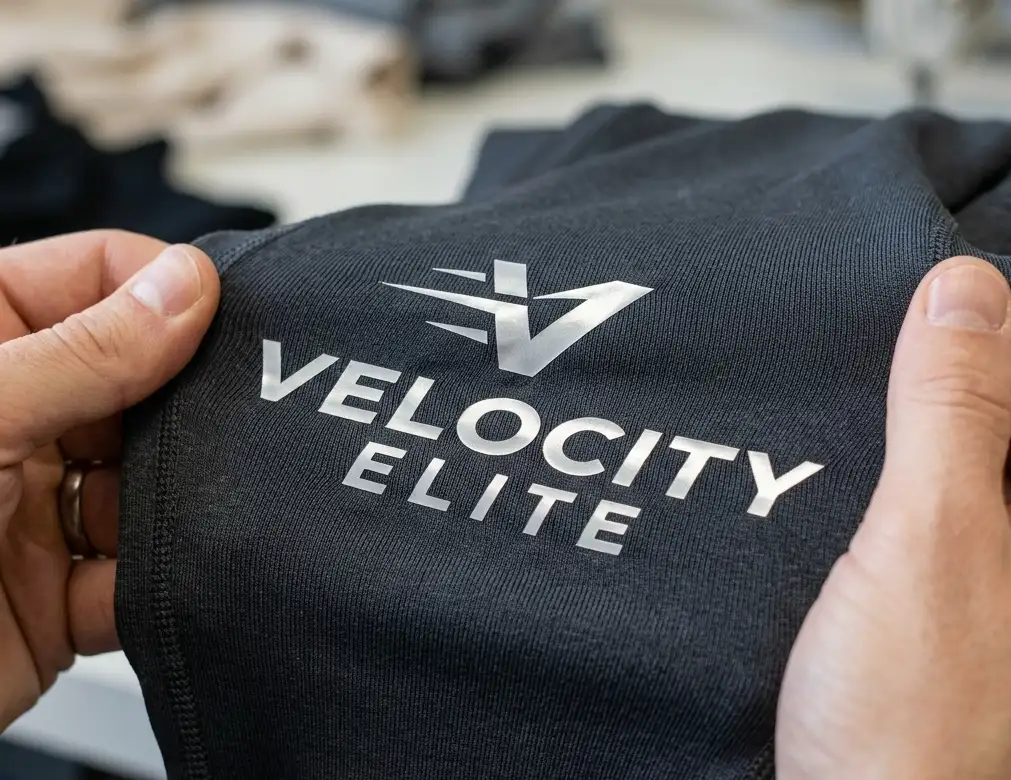
1. The Adhesion Physics: Ink-to-Fiber Interaction
The durability of a heat-transfer logo depends on the cross-linking of the adhesive with the synthetic fibers. Unlike cotton, which is porous, Nylon 66 and Polyester fibers are non-absorbent. Therefore, the branding process must rely on Thermal Fusion.
At OUYI Activewear, we utilize computerized heat-press systems that calibrate three critical variables to ensure a perfect bond:
| Variable | Standard Parameter | Technical Purpose |
|---|---|---|
| Temperature | 160°C - 165°C | Achieving the 'Glass Transition' point of the adhesive. |
| Pressure | 4.0 - 5.0 kg/cm² | Ensuring physical penetration into the fabric matrix. |
| Dwell Time | 12 - 15 Seconds | Allowing chemical cross-linking without damaging the Elastane. |
2. The Elasticity Paradox: Why Logos Crack
The primary reason logos fail on yoga leggings is the Elasticity Paradox. While the fabric can stretch up to 200%, standard screen print inks can only stretch 30-50%. When the user puts on the garment, the ink reaches its limit and fractures.
To solve this, we utilize High-Elongation Silicon Transfers. Silicon has a unique molecular structure that allows it to expand and contract in perfect synchronization with the 90/10 Nylon-Spandex blend, maintaining structural integrity even under high-intensity bi-axial tension.
Expert Insight: The Squat-Proof Branding
"In our lab, we perform the ASTM D903 Peel Test. A world-class logo must resist a pull force of at least 15N per inch. If your manufacturer isn't testing for peel strength, your brand's reputation is at risk every time a customer performs a squat." —Senior Quality Controller, OUYI Branding Lab.
3. Choosing the Right Branding Technique
Choosing the right technique depends on your brand's positioning and the fabric's GSM:
- 3D Silicon Transfer: Best for luxury activewear. Provides a high-end, embossed feel and extreme durability.
- Reflective Heat Transfer: Essential for running gear. Utilizes glass bead technology for 360-degree visibility.
- Sublimation Tags: Ideal for seamless labels. Zero-hand-feel, meaning no skin irritation for the athlete.
Recommended Strategic Reading
Beyond branding, finding a factory that can execute these technical standards is key. Deep dive into our sourcing guide: